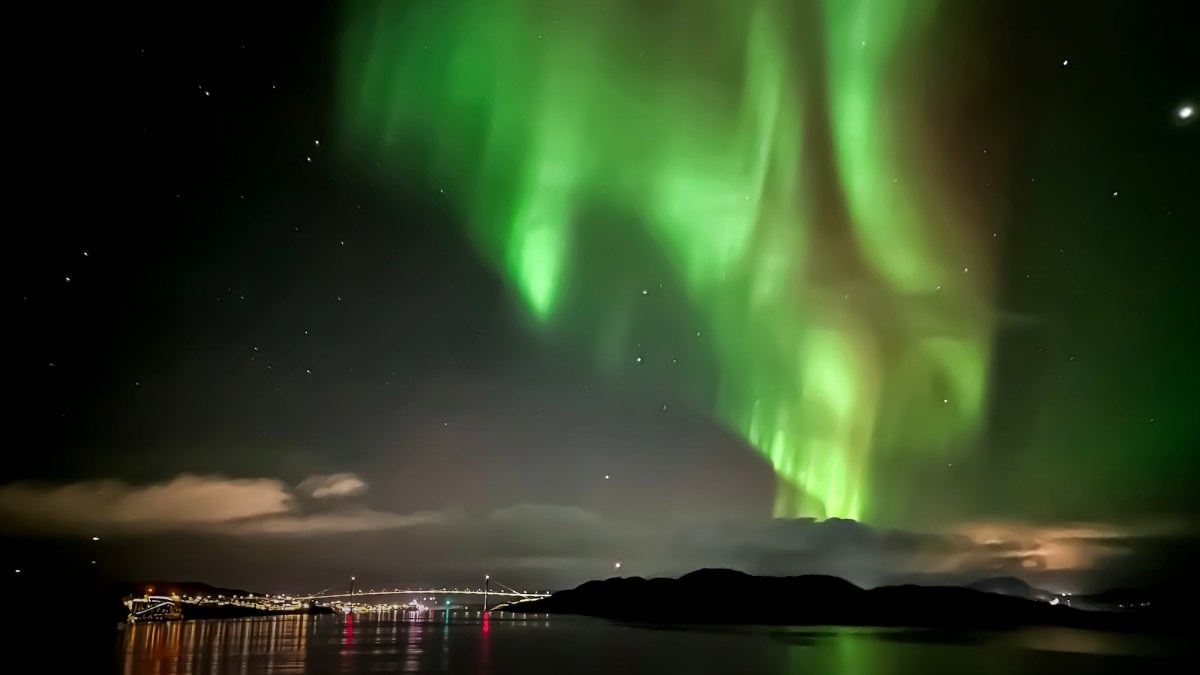
After an unforgettable first time seeing them, we had a second opportunity to experience the Northern Lights, this time in an even more spectacular way. Read our story and check out our Mini-guide for everything you need to know to maximize your chances to see this extraordinary natural phenomenon.
Let’s just admit it – our second time experiencing the northern lights in the autumn of 2024, was even more intense and incredible than the first.
We were once again onboard the Norwegian Coastal Express (Hurtigruten), which calls at 34 ports along the Norwegian coast, from Bergen in the southwest, to Kirkenes in the northeast. That evening, we were sailing from Trondheim towards Rørvik, at a latitude of 64°N.
Standing beneath a clear and scintillatingly starry sky, with the North star to guide us – we knew this night would be special. And when we spotted a shooting star darting across the sky, our intuition was confirmed. The KP index was verging on 4, the Bz was in the negatives and the solar wind speed reached 400 km/s. Thanks to the low levels of light pollution, the conditions seemed ideal. According to our apps, we had an almost 50 % chance of seeing the legendary aurora borealis.
At first, the northern lights appeared like a faint gleam and long, pale, almost milky streaks across the sky, although they were quite easy distinguishable from the scattered clouds.
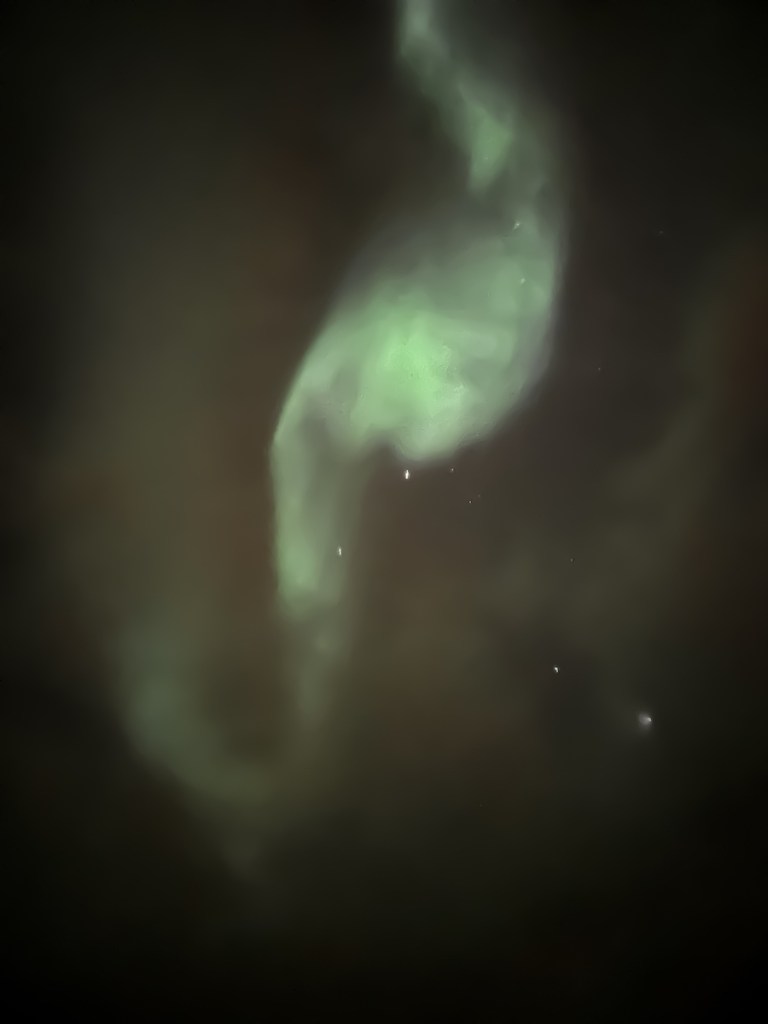
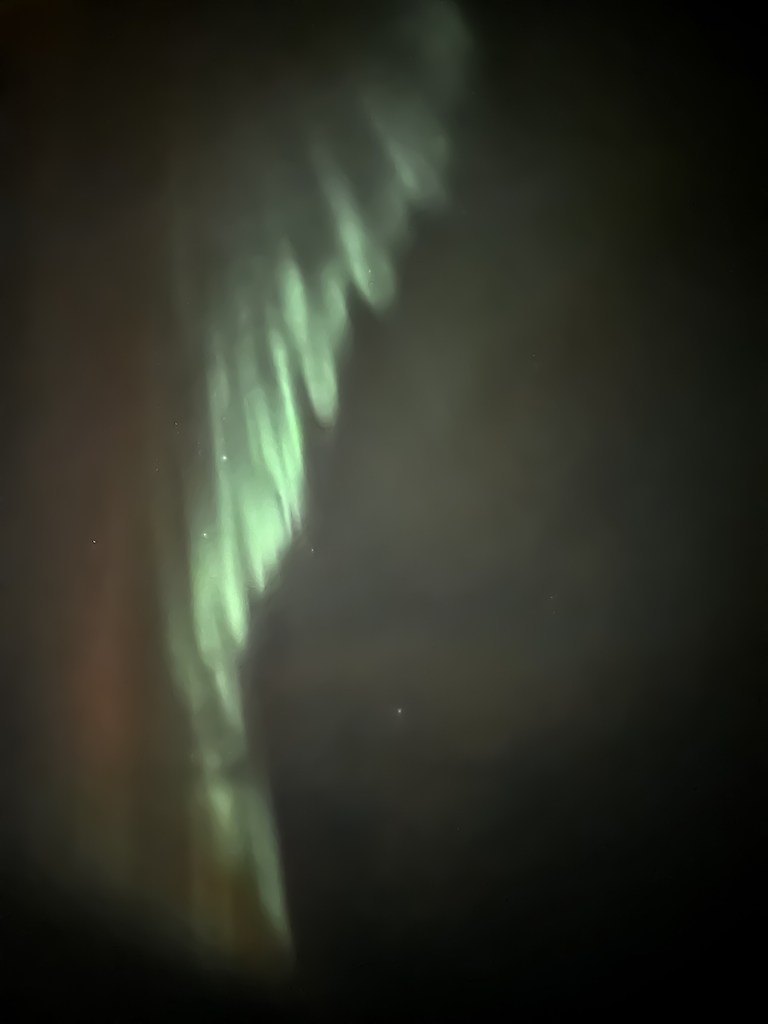
Then, vertical shafts of green light pierced the hazy clouds along the horizon. This is when the spectacle began to reach its full potential.
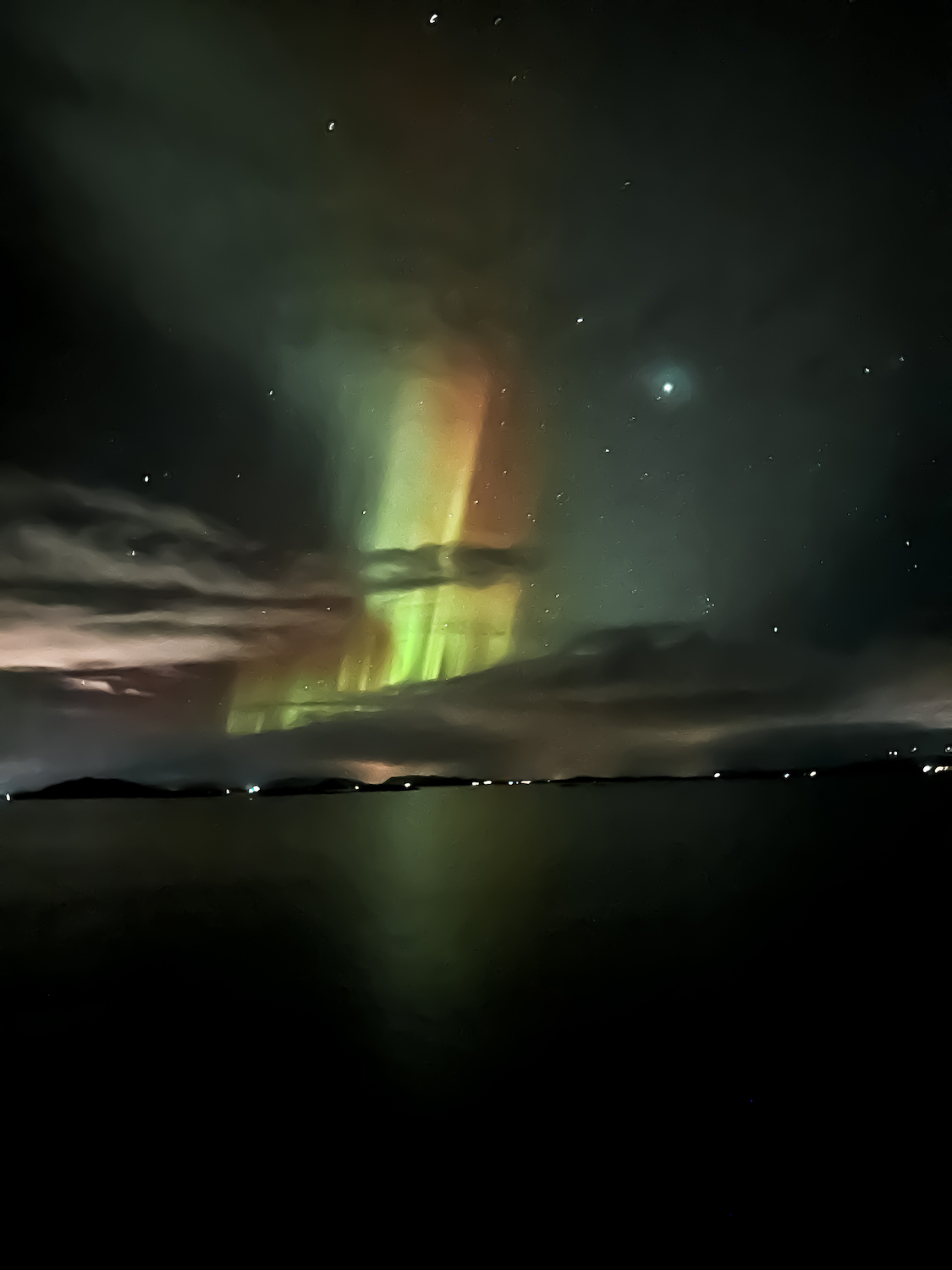
The aurora danced above us, like a diaphanous veil rippling and floating in the wind.
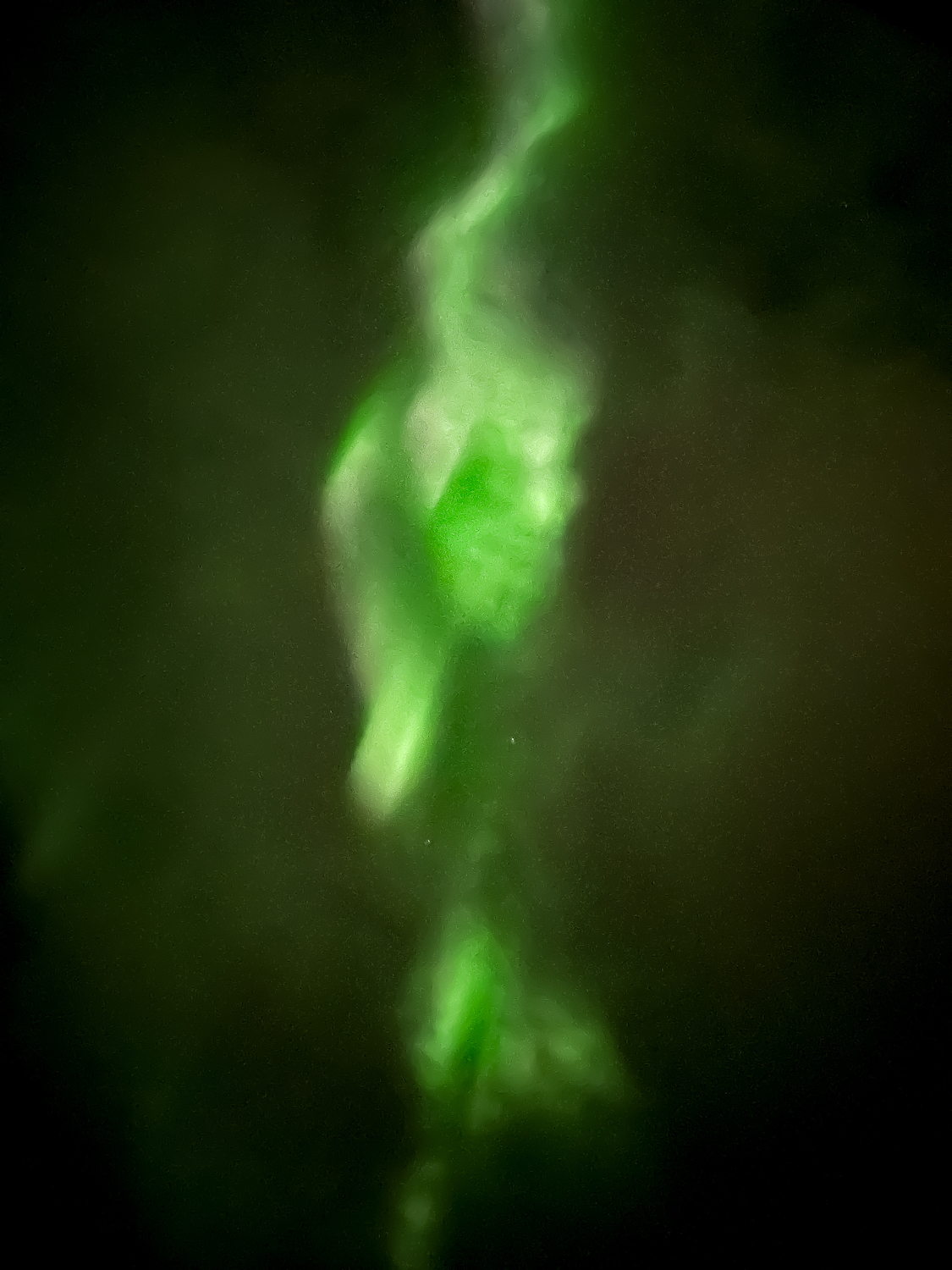
The lights formed slow waves and undulating, vibrant scrolls, taking on brilliant hues ranging from jade to emerald, with flashes of ruby.
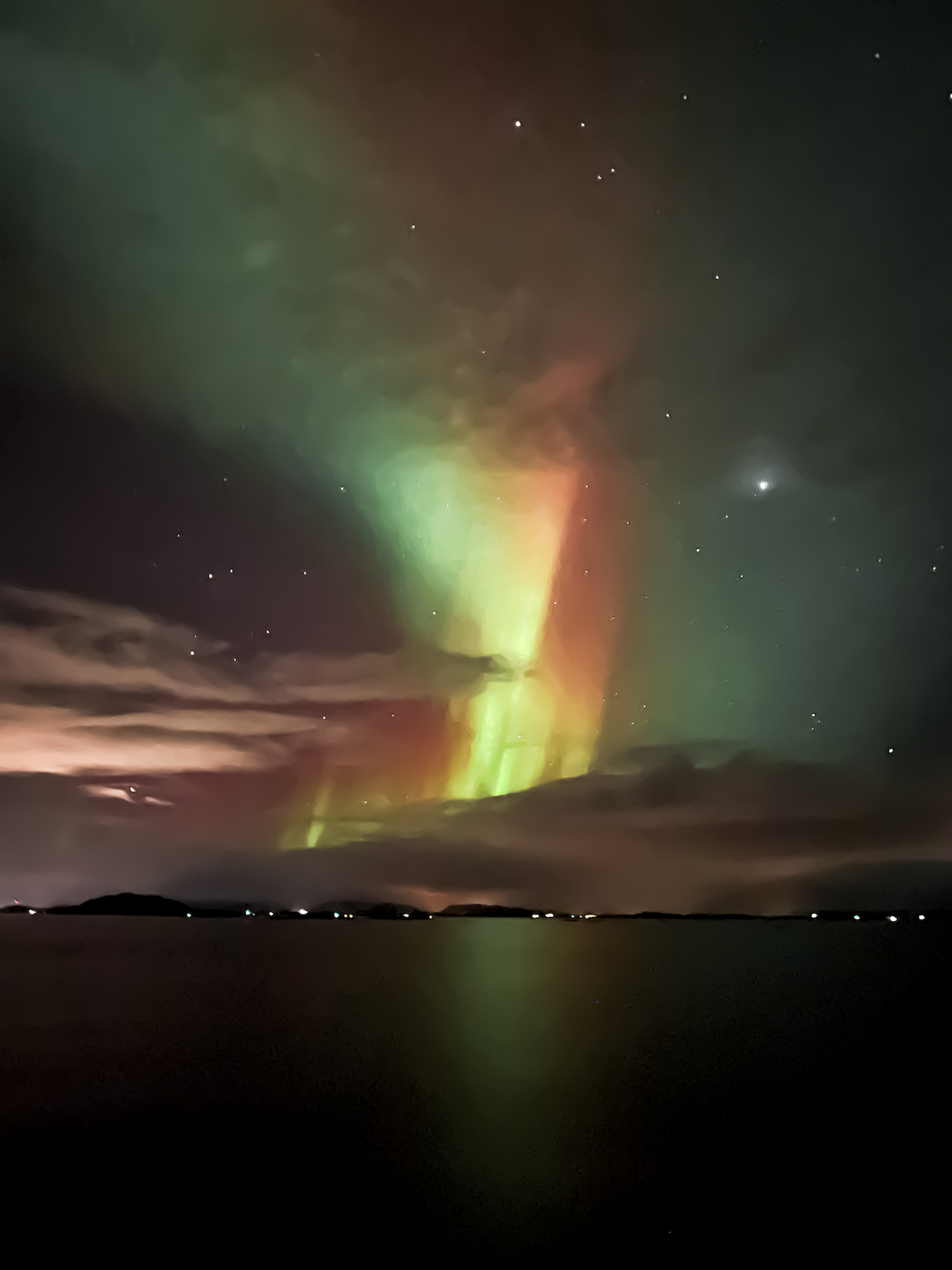
Each aurora appeared with a different intensity, at times lasting mere seconds, sometimes several minutes.
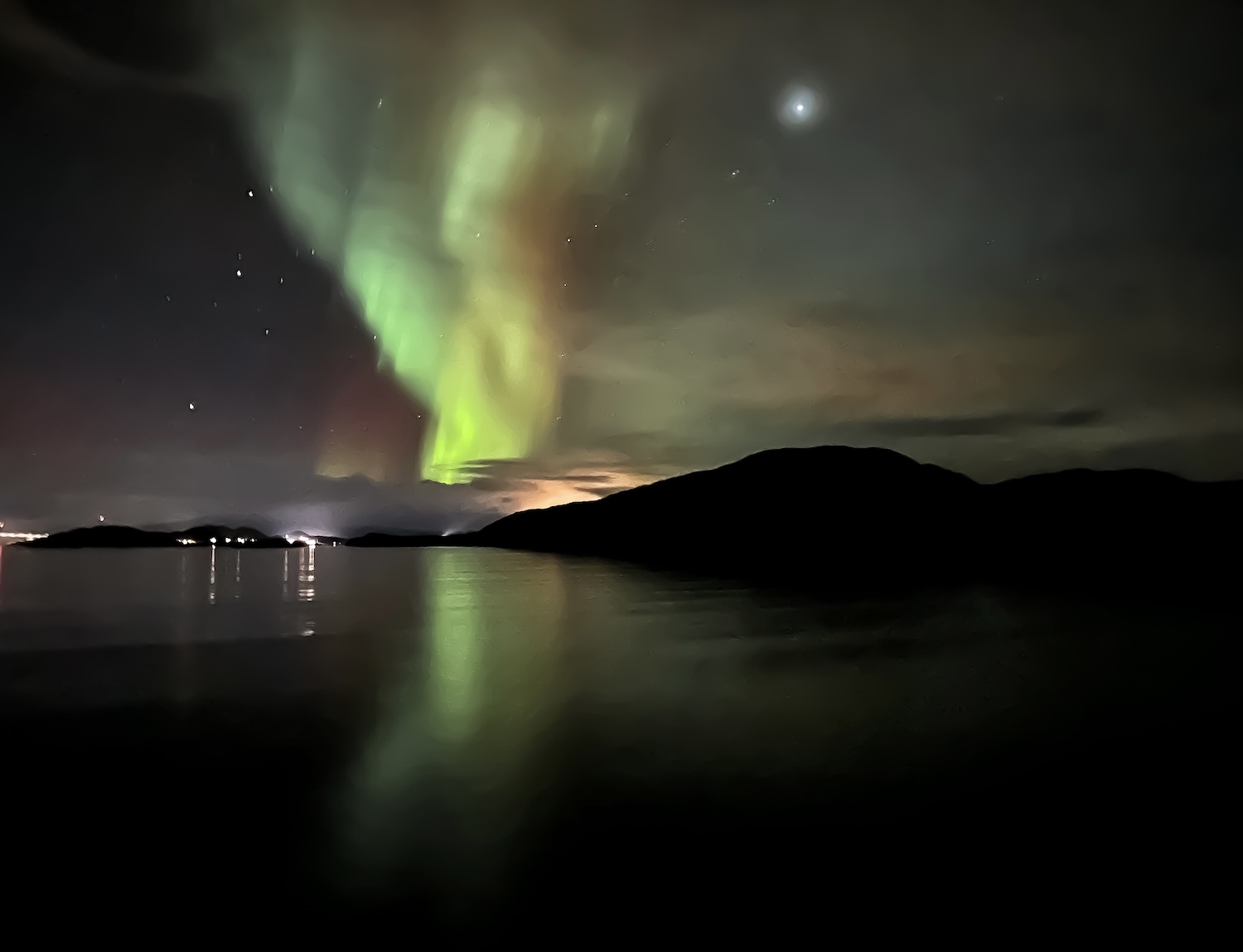
As the magic was steadily increasing, the KP index almost reached 5, the Bz was at -8 and the solar wind speed passed 480 km/s.

The sky directly above us was literally ablaze, offering an explosion of colors far more intense than during our first experience.
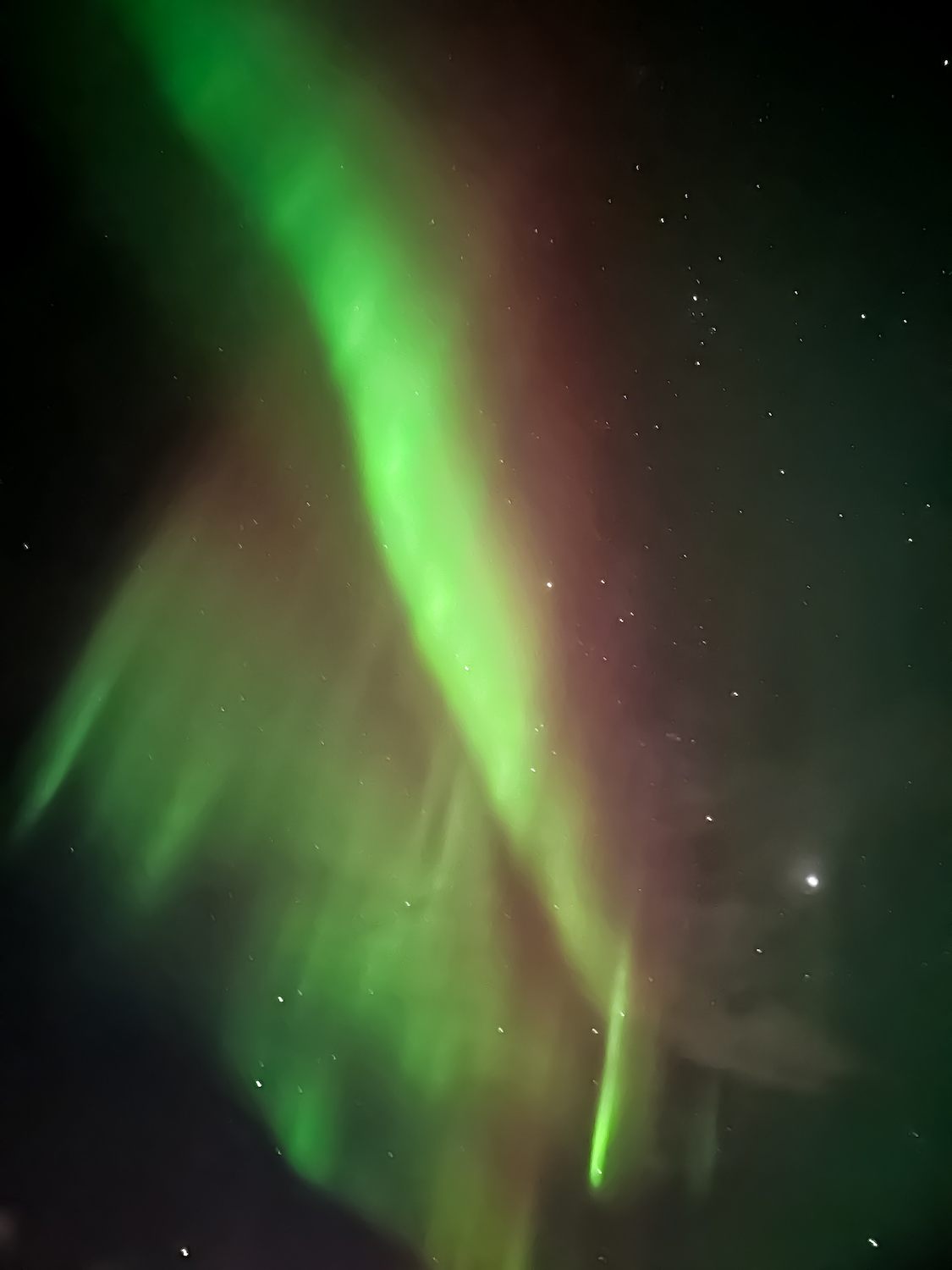
The sight was so enthralling that we simply couldn’t look away.
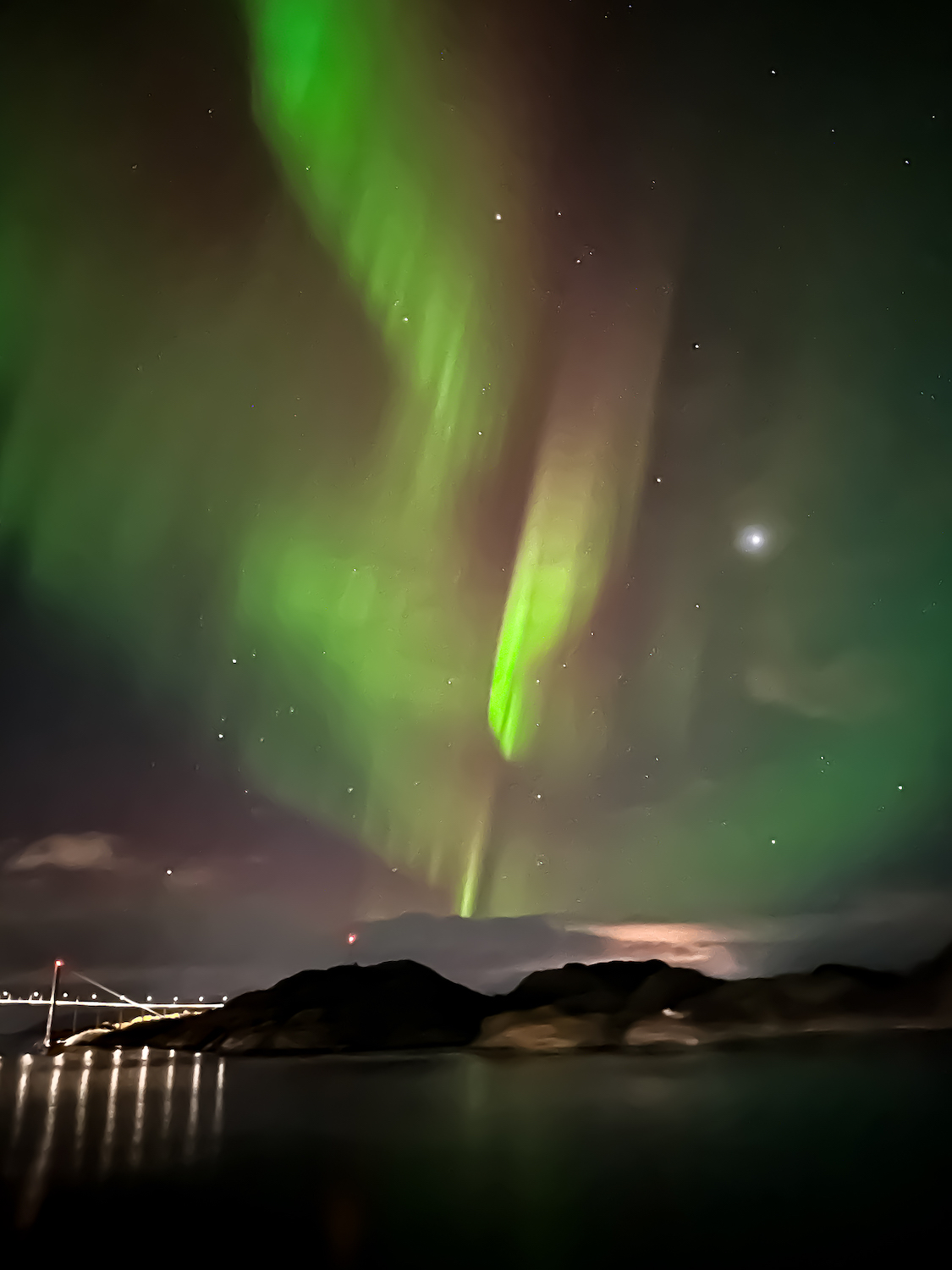
We were mesmerized by the natural phenomenon taking place right above our heads.
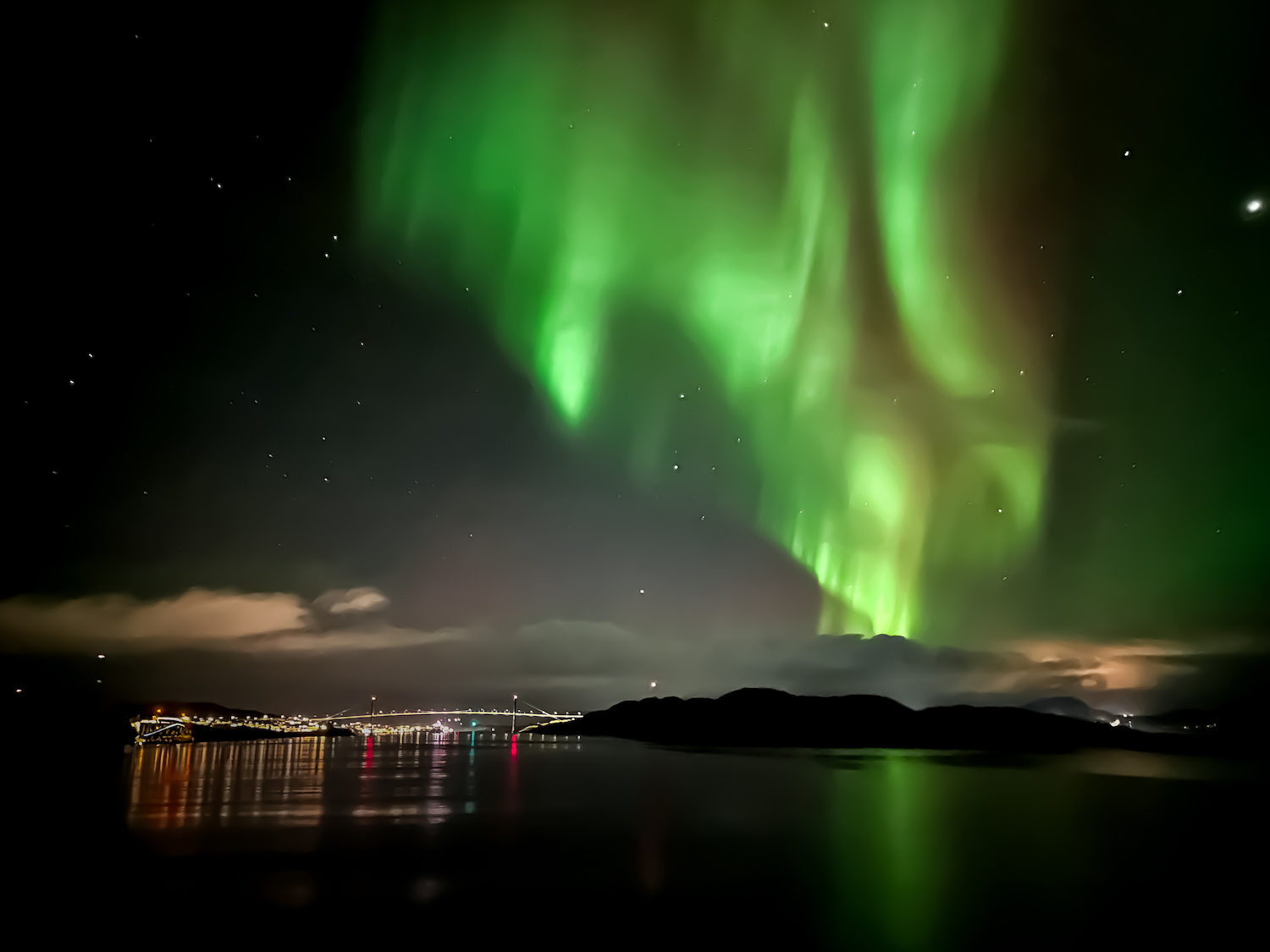
After over an hour and a half of this incredible display, the northern lights disappeared as quickly as they had appeared, further proving their elusive and enigmatic nature.

The magic of the aurora was seared into our minds that night. We could hardly sleep afterwards, knowing we had fully seized and enjoyed the moment together. Spellbound by this mysterious and captivating celestial experience, we wanted the images to remain etched into our memories.
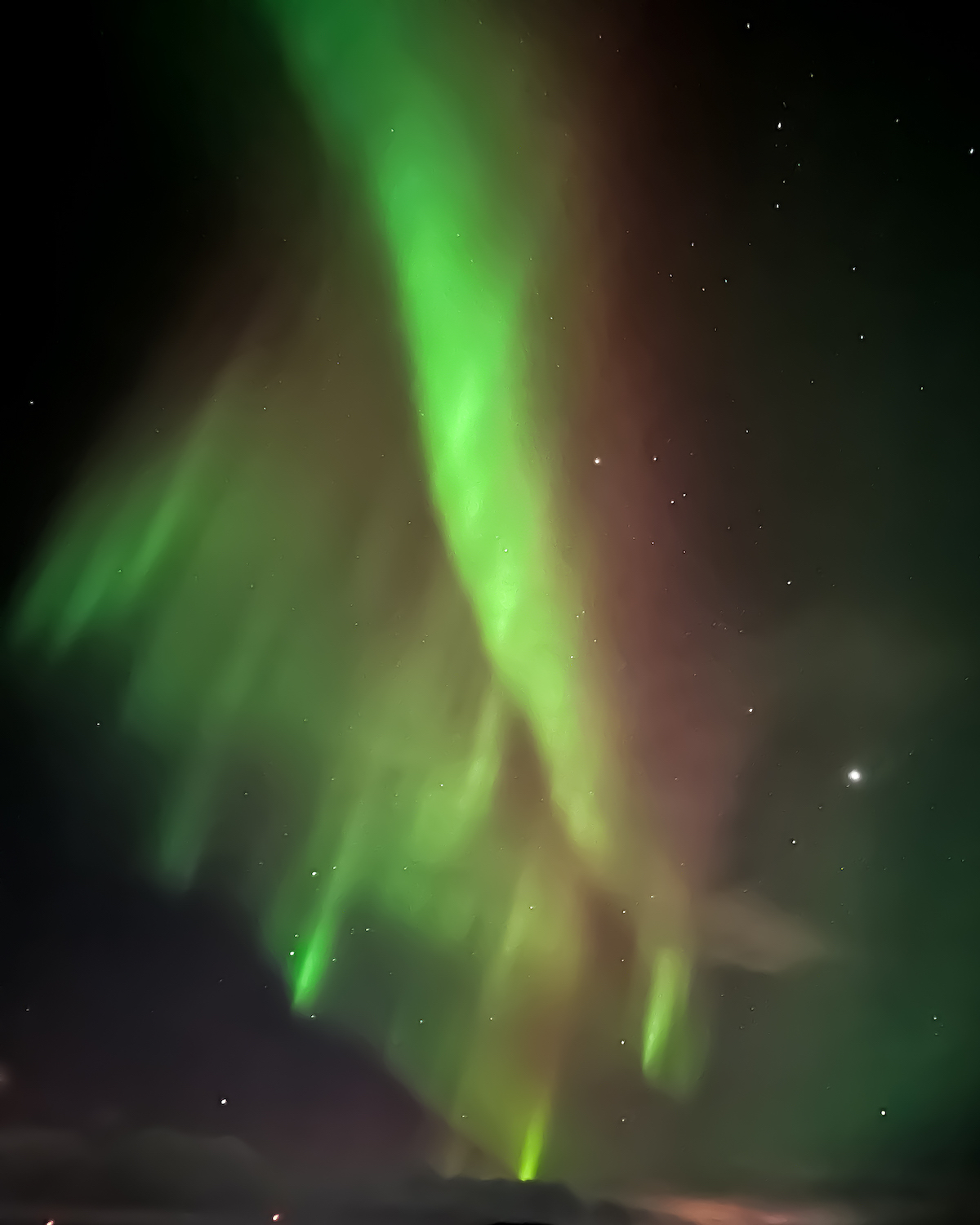
Our mini-guide: northern lights for dummies (like us)
Several requirements must be met for you to able to see the aurora:
• It is vital that it be completely dark, as nautical or astronomical twilight generally aren’t quite dark enough.
• Try to get as close to the Arctic Circle (66°33’N) as possible, or beyond. In order to see the northern lights further south than Norway, you will often need a KP index above 7.
• Clear skies or very scattered clouds
• Limited light pollution (unless the aurora is very intense)
• Sufficient solar activity (stay up to date by using the apps)
• Keep your eyes to the north: the aurora tends to appear in the northern section of the sky in the northern hemisphere.
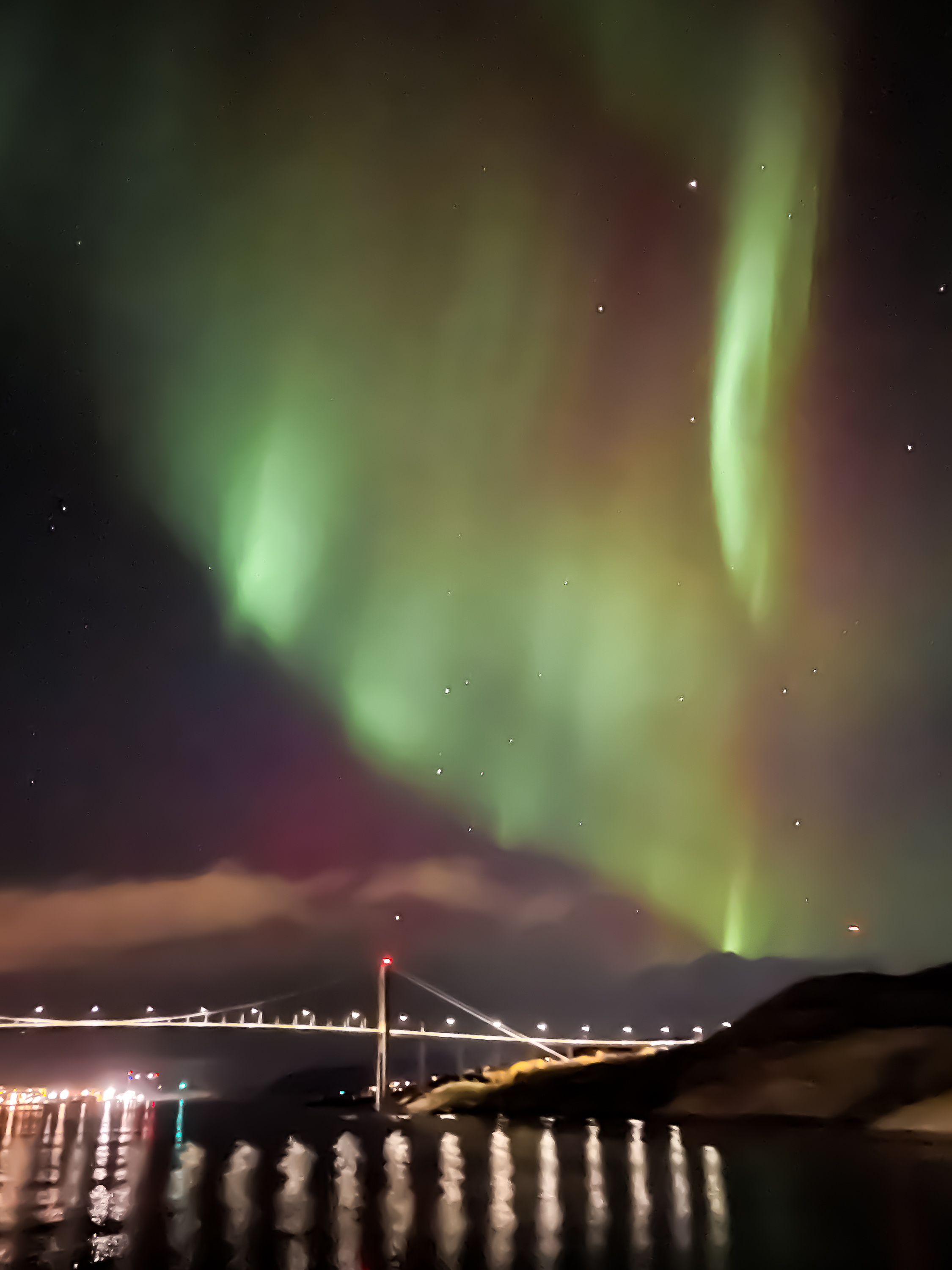
The 3 apps we use (free versions): My Aurora Forecast and AuroraAlerts for the northern lights, Yr for the weather
How we use the apps:
• My Aurora Forecast (on App Store and Google Play) allows you to pinpoint the areas in which you are most likely to spot the northern lights, as well as the cloud cover and how it progresses. Aurora Forecast is the best app when it comes to notifications (it allows you to create custom notifications).
• AuroraAlerts (on App Store and Google Play) shows you the probability of seeing aurora in real time and in the next hour.
You will also find different useful indicators: the Speed (of the solar wind) should be above km/s, the Bz index (direction of the interplanetary magnetic field) needs to be negative, and the Density (of particles in the solar wind) should be over 1 p/cc.
The app also shows the KP in real time and in an hour. Above the Arctic Circle, you generally need a KP above 2 to see the aurora. The KP index is the most important factor: on a scale from 0 to 9, it indicates the level of distortion in the Earth’s magnetic field. Simply put, the higher the KP, the more intense the aurora will be. The app also shows a KP forecast for the next 3 days.
• Yr (on App Store and Google Play): this weather app, created by the Norwegian Broadcasting Corporation NRK, is available both in English and Norwegian. The app is mostly very reliable, with an hourly forecast for the next 3 days, and prognoses for the next 10 days (up to 21 days in Norway). The tab marked “Other conditions” lets you view live webcams, as well as an aurora forecast paired with projected cloud cover.
The information from the apps will never be 100% accurate. Even though all the indicators might point to a high probability of seeing the northern lights, this does not mean you definitely will. However, the opposite is also true.
There is such a thing as “surprise” northern lights that show up in spite of the forecast and scientific indicators used by the apps. This only adds to the beauty of this natural phenomenon.
Don’t miss the full article about our trip onboard the Norwegian Coastal Express
Discover more from Strafari
Subscribe to get the latest posts sent to your email.


35 replies on “Northern Lights: our 2nd magical experience & our best tips”
Beautiful. We get the northern lights here, but seeing them reflect off the water takes it to another level! Maggie
LikeLiked by 2 people
Oh that’s awesome, Maggie, you’re very lucky! Remind me where you guys are based again?
LikeLiked by 2 people
We’re in Calgary, Alberta but I saw them more growing up in Winnipeg, Manitoba.
LikeLiked by 1 person
Sounds like they made for some amazing childhood memories 😄
LikeLiked by 1 person
Yes, and seeing them never gets old. 😊
LikeLiked by 1 person
Gorgeous photos. Well done.
LikeLiked by 1 person
Thank you so much, Rebecca! Happy holidays!
LikeLiked by 1 person
Beautiful
LikeLiked by 1 person
Thank you Mary, we’re glad you enjoyed the post!
LikeLiked by 1 person
Thanks for the pictures, looks amazing.
LikeLiked by 1 person
We’re thrilled you like them 😄
LikeLike
So magical, and great tips – thanks for sharing
LikeLiked by 1 person
Thank you 😊 hope they can be of use to you! Have you ever seen the northern lights? There have been a few very strong solar storms this past year, they were visible quite far south
LikeLike
Awesome pictures!
LikeLiked by 1 person
Thanks man, we appreciate it 🥰
LikeLiked by 1 person
What a fantastic and unforgettable experience. Most travellers head to Iceland or Norway in winter to see the spectacular natural spectacle that is the Northern Lights. However, what few people realize is that actually, with a bit of luck and planning, you can see this dazzling light show in Ireland, too! We were lucky to see them three times last year right here on our doorstep and couldn’t be happier! Wishing you and your family health, happiness, peace and prosperity this Christmas and in the coming New Year. Aiva xx
LikeLiked by 1 person
That’s very true! If you head to a place with very little light pollution during a strong solar storm, you can see them further south in Europe like Germany and Ireland 😄 how wonderful that you’ve been able to see them at home!
LikeLike
I would love to see the Northern lights one day.
LikeLiked by 1 person
We hope you’ll be able to one day!!
LikeLiked by 1 person
Amazing pictures! All of this year I have just been hearing and seeing more of Northern Lights and Norway, all for good reason. I would adore to visit even if it were to stare at the sky for hours.
LikeLiked by 1 person
It’s definitely an increasingly popular destination! There are also places in Sweden and Finland that offer great opportunities to see them.
LikeLiked by 1 person
Thank you for the tip! I am already eying Norway for their music festivals, so you can argue I’m just looking for all the reasons to visit Norway. 😅
LikeLiked by 1 person
Amazing!
LikeLiked by 1 person
Thank you Angela, we’re glad you enjoyed the photos! Wishing you a happy holiday season 😄
LikeLiked by 1 person
I do like them🙂
Happy holidays to you too!!!!!! 🙋🎄
LikeLiked by 1 person
Incredible! I love how the bridge complements the beauty of the aurora.
LikeLiked by 1 person
Thank you Jonny! We agree, the bridge really adds to the composition 😊
LikeLike
Beautiful captures. I know the feeling. We saw the green and pink light show on the first day of 2025.
LikeLiked by 1 person
How wonderful!! We saw there were some very intense Aurora that day. We’re thrilled you were able to experence this incredible phenomenon.
LikeLiked by 1 person
They are spectacular!
LikeLiked by 1 person
Thank you! You can never get enough 😅
LikeLiked by 1 person
You have been lucky to have this magical experience… We missed the northern lights on our visit to iceland… Maybe next time 🙂
LikeLiked by 1 person
Hopefully next time! There are other destinations where you can see hjem, but they are not easy to spot…
LikeLike
We’ve got engaged under the Northern Lights, it’s spectacular. Truly one of the most beautiful and wonderful things to observe on our planet!
LikeLiked by 2 people
Congratulations, that’s amazing !!
LikeLike